Products · Stage 01
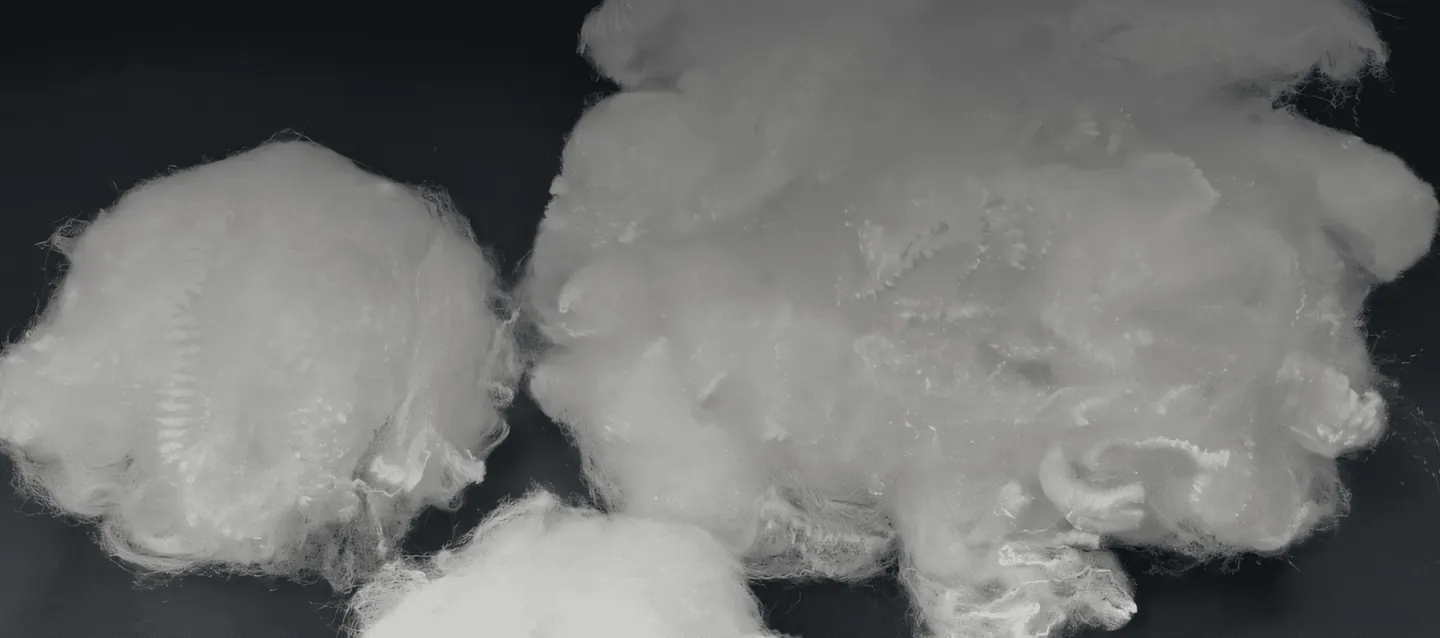
Polyester staple fibre
Virgin fibre from our own synthesis: semi-matt, solid, crimped, non-siliconised. For yarn, nonwovens, fillings and technical fabrics.
Specifications
Feedstock
PET from our own synthesis
Linear density
0.17 / 0.33 / 0.60 tex
Cut length
36–66 mm
Form
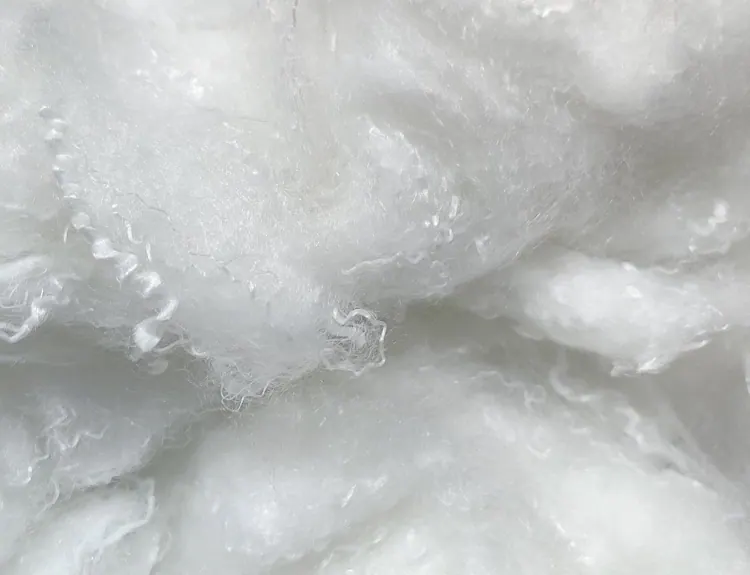
semi-matt, solid, crimped, non-siliconised
Modification
regular
Whiteness
from 85%
Packaging
370 kg bale in polyethylene film
Capacity
200 t/day · 73,000 t/year
Properties
Why polyester fibre
- Strength — high breaking load of 4–5 cN/tex
- Abrasion resistance — withstands rubbing and repeated deformation
- UV stability — does not fade in sunlight
- Low shrinkage — holds its dimensions under moisture and heat
- Chemical resistance — to acids, alkalis and solvents
- Easy care — dries quickly, washes out easily and needs no ironing
- Heat resistance — withstands 180–200 °C
- Hypoallergenic — safe for skin contact
Applications
Where the fibre is used
- Textiles: apparel, sportswear, workwear, bed linen, curtains
- Nonwovens: wet wipes, medical masks, hygiene products
- Technical goods: geotextiles, car interior trim, ropes, nets, slings
- Fillings: synthetic down, padding, hollow fibre for quilts and pillows
Blends
Compatibility with other fibres
The fibre processes well in blends with natural and man-made fibres. Typical compositions:
- 65% polyester / 35% cotton — shirting and suit fabrics
- 50% polyester / 50% wool — suit and coat fabrics
- 80% polyester / 20% viscose — lining fabrics
Market
The global market and its outlook
Polyester fibres hold a leading position among man-made fibres, and the market continues to grow.
- Import substitution and the development of domestic production
- State support for import substitution programmes
- Wider use in medicine, construction and automotive
Average annual growth rate
4.1%
Forecast for 2032
USD 46.8 billion
Growth drivers
textile and apparel industry, nonwovens, innovation
Development
Promising directions
Research and development is under way at the plant: fibre grades with specified properties are being created.
- High-technology materials for medicine and industry: antibacterial, flame-retardant and conductive fibres
- Softness, air permeability and hygroscopicity — improved fibre characteristics
- Lower energy consumption in production, automation and digitalisation of processes
- High-modulus fibres for composites and fibres with controlled crimp for nonwovens
- Biodegradable polyesters
Gallery
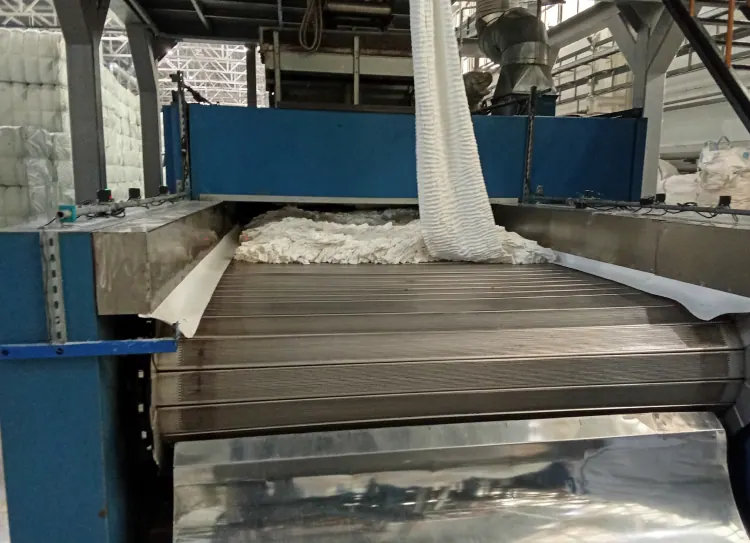
Production in detail
FAQ
Frequently asked questions
Fibre is shipped in 370 kg bales. The minimum lot is agreed individually — for regular customers shipments from a single bale are possible.
Yes. We send samples of different grades for laboratory trials on your own equipment. Please leave a request stating the linear density and cut length you need.
Yes, every lot is issued with a quality certificate stating the parameters to GOST: linear density, strength, elongation, spin finish content, moisture content and heat shrinkage.
Yes, our polyester fibre sales and export department supplies customers in the EAEU countries and South-East Asia.
Let us quote your fibre supply
Tell us the grade, volume and lead times — we will prepare a commercial offer.