Products · PET
PET and recycling
Polyethylene terephthalate synthesis is where our production chain begins. The melt goes to fibre spinning, part of it to granulate, and recycled feedstock is returned to production.
Specifications
Process
esterification + polycondensation
Esterification temperature
240–260 °C
Polycondensation temperature
280–290 °C
Melt viscosity
0.6–0.7 dl/g
Matting agent
TiO₂, 0.2–0.5% by weight
Delivery form
melt for spinning · granulate
Technology
Two synthesis stages
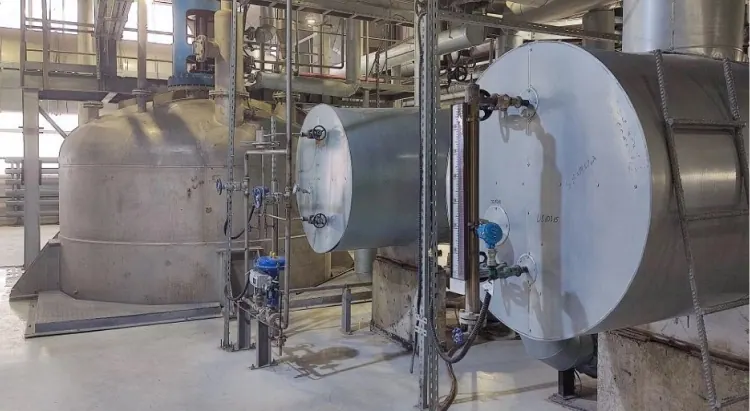
PET synthesis is a two-stage process. First, terephthalic acid is esterified with ethylene glycol in the presence of a catalyst to produce the diglycol ester of terephthalic acid. Pre-polycondensation and final polycondensation then follow under vacuum, extending the molecular chains to the required melt viscosity.
- Esterification: 240–260 °C, pressure 0.2–0.3 MPa, 3–4 hours
- Pre-polycondensation: 270–280 °C, vacuum 100–200 Pa, 2–3 hours
- Final polycondensation: 280–290 °C, vacuum <100 Pa, 3–4 hours
Recycling
Recycled polyester in production
We process recycled polyester feedstock and return it to the process cycle. This reduces both the environmental footprint and the cost of our products.
- Receiving and preparation of recycled PET
- Control of feedstock purity and moisture content
- Return to the production of fibre and technical goods
Gallery
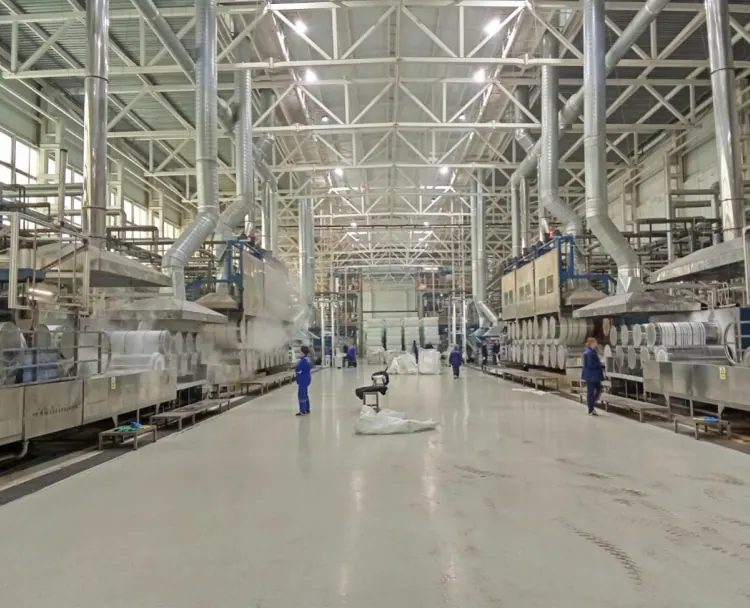
Production in detail


FAQ
Frequently asked questions
PET Sales Department: +7 (951) 669-80-84, recycling@shpz.su.
Yes, acceptance terms and feedstock requirements are agreed with the PET Sales Department.
Let us discuss your PET supply
Granulate, melt or recycled feedstock — tell us what you need and we will propose a scheme.